
Taj Mahal in Moonlight
- Home
- Taj Mahal in Moonlight
Taj Mahal in Moonlight
Taj Mahal in Moonlight – A Timeless Beauty Under the Silver Glow
The Taj Mahal, one of the Seven Wonders of the World, has captured the imagination of millions with its breathtaking beauty and timeless romance. While it’s stunning at any hour of the day, witnessing the Taj Mahal in moonlight is an experience that transcends the ordinary. Bathed in the soft, silvery glow of the moon, this iconic monument transforms into something ethereal—almost surreal—creating a memory that lingers forever in the heart of every traveler.
The Magic of Moonlight at the Taj Mahal
Built by Mughal Emperor Shah Jahan in memory of his beloved wife Mumtaz Mahal, the Taj Mahal is not just an architectural marvel—it’s a symbol of eternal love. When the moonlight touches its pristine white marble, the monument seems to shimmer and change colors, reflecting shades of blue, silver, and pearl.
The atmosphere is calm and serene, with the Yamuna River gently flowing beside it, and the stars twinkling above. The usual crowds are replaced by a hushed silence, amplifying the emotional and spiritual impact of the experience.
Moonlight Viewing – A Unique Experience
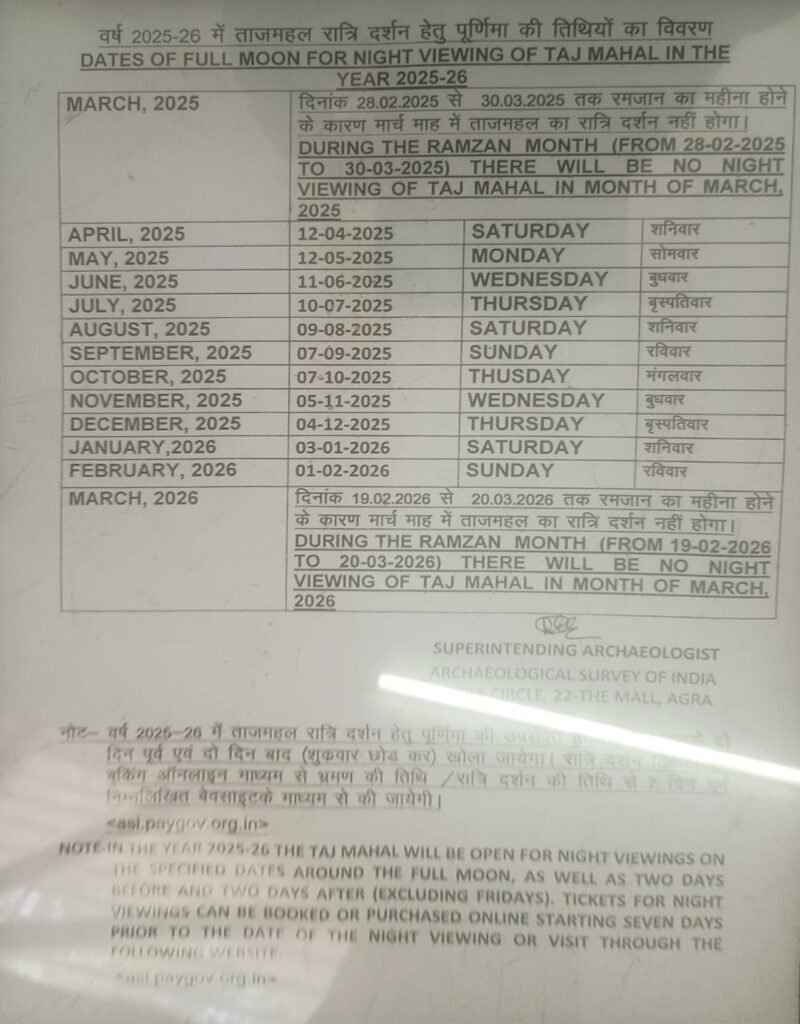
The Archaeological Survey of India allows night viewing of the Taj Mahal only on select nights each month:
Five nights every month: the full moon night, two nights before, and two nights after.
Viewing is allowed in eight batches of 50 people each, from 8:30 PM to 12:30 AM.
Each batch gets approximately 30 minutes to view the monument.
Visitors view the Taj from a designated platform at a safe distance, as entry into the main mausoleum is not allowed during night hours. However, the sight of the illuminated dome, minarets, and marble reflecting the moonlight is more than enough to leave one spellbound.
How to Book Moonlight Viewing Tickets
Tickets must be booked in advance, at least one day before the viewing date.
They can be purchased from the ASI office in Agra or through authorized online platforms.
A valid photo ID is required at the time of booking and during the visit.
Foreign tourists and Indian nationals have separate ticket pricing.
Best Time to Visit
While moonlight viewing is possible on five nights every lunar cycle, the full moon night offers the most spectacular views. The months between October and March are ideal, as the skies are usually clear and the weather is pleasant.
Tips for Taj Mahal Moonlight Visit
Check lunar calendar in advance to align your trip with full moon nights.
Arrive early for your batch to avoid last-minute delays or confusion.
Photography is restricted, and no tripods or professional cameras are allowed.
Security is tight, so avoid carrying bags or unnecessary items.
Dress modestly and comfortably, keeping in mind the time and the temperature.
Why It’s Worth It
Seeing the Taj Mahal in moonlight is not just a visual treat—it’s an emotional journey. The monument appears dreamlike, as if floating in the soft glow of the moon. It offers a moment of quiet reflection, romance, and awe that is rarely found in our fast-paced world.
For couples, it’s a perfect romantic outing. For solo travelers or spiritual seekers, it’s a moment to connect with history and beauty on a deeper level. And for photographers, it’s a rare chance to capture one of the world’s most photographed monuments in an entirely new light.
The Taj Mahal by moonlight is more than a sight—it’s a feeling, a poem in marble brought to life under the stars. Whether you’re a first-time visitor or a returning admirer, witnessing this wonder under the full moon is an experience that should be on every traveler’s bucket list.
So plan ahead, mark your calendars, and let the moonlight guide you to one of the most magical moments you’ll ever witness.
Taj Mahal Moonlight Tickets Booking